Table of contents and map
Where to Stay in Glasgow: Neighborhood Guide & Best Areas
Choosing the right area to sleep in Glasgow can completely transform your experience in the city. Do you prefer the convenience of being steps away from the train stations, the bohemian and intellectual vibe of the West End, or the culinary heartbeat of Finnieston? In this guide, we break down the best neighborhoods in the city, their pros, cons, and which one best suits your travel style so you can find your perfect base.
Where to Stay in Glasgow: Neighborhood Guide & Best Areas
Choosing the right area to sleep in Glasgow can completely transform your experience in the city. Do you prefer the convenience of being steps away from the train stations, the bohemian and intellectual vibe of the West End, or the culinary heartbeat of Finnieston? In this guide, we break down the best neighborhoods in the city, their pros, cons, and which one best suits your travel style so you can find your perfect base.
Glasgow is a city of contrasts, and each of its neighborhoods has an incredibly distinct personality. Unlike other European capitals where everything is concentrated in a single historic center, life (and key points of interest) in Glasgow is distributed between the center and the dynamic west side.
To help you decide where to base yourself, we have broken down the city into the 4 best areas to look for accommodation, detailing what you will find in each and which type of traveler they are recommended for.
1. City Centre: The Most Practical Option
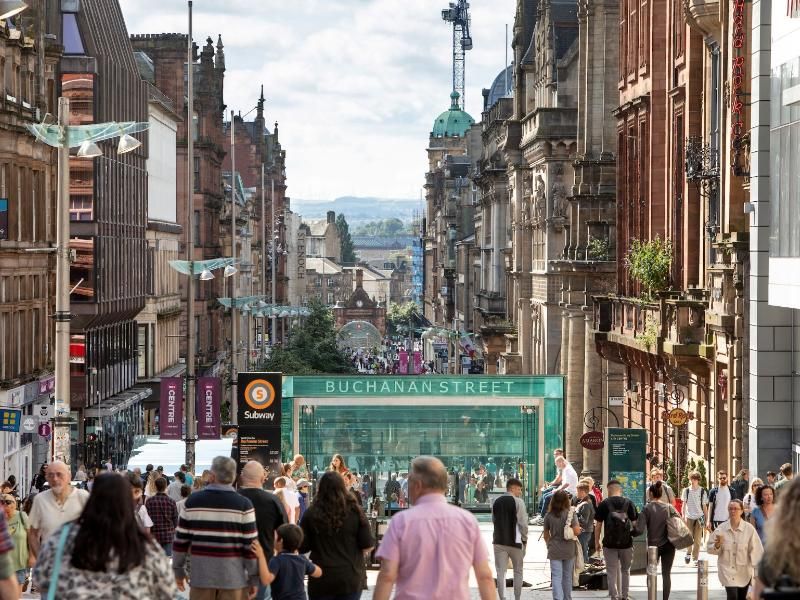
The City Centre is the commercial and commercial heart of Glasgow. Defined by the bustling thoroughfares of Buchanan Street, Argyle Street, and Sauchiehall Street (known as the "Golden Mile" of shopping), it is a vibrant area in constant motion.
- Pros: It is the most strategic area if you plan to use Glasgow as a base to explore Scotland. You have the two main stations (Glasgow Central and Glasgow Queen Street) just a few minutes' walk away, making connections for day trips incredibly easy. In addition, the selection of hotels and international chains is massive.
- Cons: As it is the financial and commercial district, some streets can lose their charm at night or become quite noisy due to traffic.
- Ideal for: First-time visitors, short weekend getaways, or those traveling exclusively by train.
2. Merchant City: Elegance, Culture, and Nightlife
Located just east of the City Centre, Merchant City is one of Glasgow’s oldest and most stylish neighborhoods. In the 18th century, this area housed the warehouses of the city's wealthy tobacco lords and merchants; today, those imposing sandstone buildings have been transformed into designer lofts, art galleries, independent boutiques, and trendy restaurants.
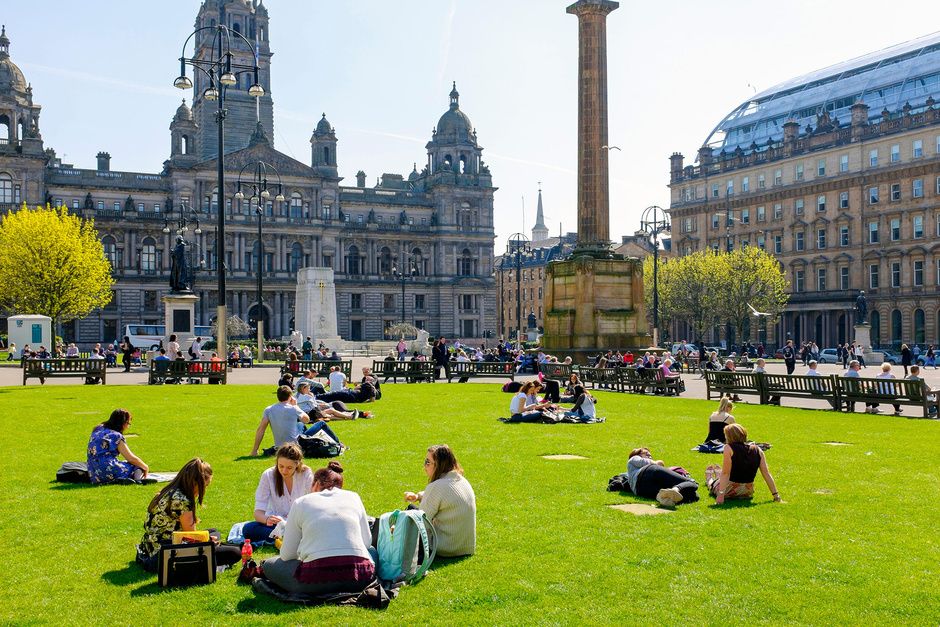
- Pros: It is a beautiful, highly photogenic area with a fantastic cultural atmosphere. You are steps from George Square and the majestic Glasgow Cathedral, but in a much more residential and sophisticated setting than the pure commercial center.
- Cons: Accommodation prices tend to be slightly higher due to the exclusive and trendy character of the neighborhood.
- Ideal for: Couples, foodies, design lovers, and those looking to head out for dinner or drinks at night without having to wander far from their hotel.
3. The West End: Bohemian Vibe, Parks, and Culture
If you are looking to immerse yourself in Glasgow's most bohemian, academic, and relaxed side, the West End is your place. Centered around the lively Byres Road, this neighborhood stands out for its cobbled lanes, dark-fronted Victorian townhouses, and slower pace of life.
- Pros: Staying here puts you steps away from top-tier sights like the breathtaking University of Glasgow, the picturesque cobbled lane of Ashton Lane, and the green oasis of the Glasgow Botanic Gardens. The atmosphere is safe, youthful, and very local.
- Cons: It is located away from the city center (about 3 kilometers). While you can walk there via a beautiful scenic path, you will need to use the subway daily if you want to reach the main train stations.
- Ideal for: Travelers seeking a quieter vibe, lovers of Gothic and Victorian architecture, and stays of more than two days in the city.
4. Finnieston: The Culinary & Industrial Epicenter
Strategically located between the City Centre and the West End, Finnieston is the ultimate example of Glasgow's urban regeneration. Once a gray industrial and dockland area, it is now widely considered one of the coolest neighborhoods in the UK. Its main strip, Argyle Street, packs an astonishing concentration of award-winning restaurants, specialty coffee shops, and pubs featuring live music.
- Pros: It is the perfect base if you are attending a concert or event at the OVO Hydro or the SEC Centre. It offers an ideal balance: you can easily walk to both the center and the attractions of the West End.
- Cons: The hotel offering itself is a bit more limited than in the center, with self-catering holiday apartments being more predominant.
- Ideal for: Younger travelers, hardcore foodies, and anyone visiting the city to attend major events or concerts.
Neighborhood Summary by Travel Style
To quickly pinpoint your ideal neighborhood in Glasgow, evaluate your main travel priority:
- If your priority is logistics and transport: Choose the City Centre. You will be right next to the stations to travel easily.
- If you want historic charm and a select nightlife scene: Your spot is Merchant City.
- If you prefer green landscapes, bookstores, and fairytale architecture: Look in the West End.
- If you are all about the food scene and concerts: Stay in Finnieston.
Practical Tips for Booking Your Accommodation in Glasgow
- The Subway Advantage: Glasgow features a circular subway line (known locally as "The Clockwork Orange"). If you find a place to stay that is slightly further from the center but less than a 5-minute walk from a subway station (like Hillhead, Buchanan Street, or St Enoch), you will be perfectly connected in a matter of minutes.
- Watch Out with Your Car: If you are doing a road trip through Scotland and plan to stop in Glasgow, avoid City Centre hotels that do not have private parking at all costs. Street parking in the center is incredibly expensive and strictly regulated. For road trips, the residential areas of the West End or Finnieston tend to be much more car-friendly.
Frequently Asked Questions About Staying in Glasgow (FAQ)
Which is the safest area to stay in Glasgow?
The West End and Merchant City are considered the quietest and safest areas, making them ideal for families or solo travelers. The City Centre is also safe, though as in any major city, it is wise to stay aware of your surroundings at night on deserted shopping streets or near the main train stations.
Is it better to stay in Edinburgh or Glasgow?
It entirely depends on your itinerary. Edinburgh holds a more traditional and direct tourist appeal. However, Glasgow usually offers substantially cheaper accommodation rates and serves as a superior logistical base if you plan on taking day trips north to the Highlands or west to the coast and islands.
How many days are recommended to stay in Glasgow?
To see the city's main highlights, 1 to 2 days are plenty. You can check out our suggested route in our Glasgow 1 or 2-day itinerary guide. If you plan to use the city as a strategic base to explore the surroundings, we suggest staying between 4 and 5 nights.
Do I need public transport to move between neighborhoods?
While Glasgow is highly walkable, the distance between the City Centre and the West End is about a 35 to 40-minute walk. Using the circular subway is the fastest and cheapest way to connect both areas in under 10 minutes.
Useful Links to Keep Organizing Your Glasgow Itinerary
The City Centre is the commercial and commercial heart of Glasgow. Defined by the bustling thoroughfares of Buchanan Street, Argyle Street, and Sauchiehall Street (known as the "Golden Mile" of shopping), it is a vibrant area in constant motion.
- Pros: It is the most strategic area if you plan to use Glasgow as a base to explore Scotland. You have the two main stations (Glasgow Central and Glasgow Queen Street) just a few minutes' walk away, making connections for day trips incredibly easy. In addition, the selection of hotels and international chains is massive.
- Cons: As it is the financial and commercial district, some streets can lose their charm at night or become quite noisy due to traffic.
- Ideal for: First-time visitors, short weekend getaways, or those traveling exclusively by train.
PUBLICIDAD
Travel with Data: Get your Saily eSIM
- ✓Internet in seconds upon landing
- ✓Flexible plans in 180+ countries
- ✓Easy setup directly via the App
Located just east of the City Centre, Merchant City is one of Glasgow’s oldest and most stylish neighborhoods. In the 18th century, this area housed the warehouses of the city's wealthy tobacco lords and merchants; today, those imposing sandstone buildings have been transformed into designer lofts, art galleries, independent boutiques, and trendy restaurants.
- Pros: It is a beautiful, highly photogenic area with a fantastic cultural atmosphere. You are steps from George Square and the majestic Glasgow Cathedral, but in a much more residential and sophisticated setting than the pure commercial center.
- Cons: Accommodation prices tend to be slightly higher due to the exclusive and trendy character of the neighborhood.
- Ideal for: Couples, foodies, design lovers, and those looking to head out for dinner or drinks at night without having to wander far from their hotel.
If you are looking to immerse yourself in Glasgow's most bohemian, academic, and relaxed side, the West End is your place. Centered around the lively Byres Road, this neighborhood stands out for its cobbled lanes, dark-fronted Victorian townhouses, and slower pace of life.
- Pros: Staying here puts you steps away from top-tier sights like the breathtaking University of Glasgow, the picturesque cobbled lane of Ashton Lane, and the green oasis of the Glasgow Botanic Gardens. The atmosphere is safe, youthful, and very local.
- Cons: It is located away from the city center (about 3 kilometers). While you can walk there via a beautiful scenic path, you will need to use the subway daily if you want to reach the main train stations.
- Ideal for: Travelers seeking a quieter vibe, lovers of Gothic and Victorian architecture, and stays of more than two days in the city.
Strategically located between the City Centre and the West End, Finnieston is the ultimate example of Glasgow's urban regeneration. Once a gray industrial and dockland area, it is now widely considered one of the coolest neighborhoods in the UK. Its main strip, Argyle Street, packs an astonishing concentration of award-winning restaurants, specialty coffee shops, and pubs featuring live music.
- Pros: It is the perfect base if you are attending a concert or event at the OVO Hydro or the SEC Centre. It offers an ideal balance: you can easily walk to both the center and the attractions of the West End.
- Cons: The hotel offering itself is a bit more limited than in the center, with self-catering holiday apartments being more predominant.
- Ideal for: Younger travelers, hardcore foodies, and anyone visiting the city to attend major events or concerts.
To quickly pinpoint your ideal neighborhood in Glasgow, evaluate your main travel priority:
- If your priority is logistics and transport: Choose the City Centre. You will be right next to the stations to travel easily.
- If you want historic charm and a select nightlife scene: Your spot is Merchant City.
- If you prefer green landscapes, bookstores, and fairytale architecture: Look in the West End.
- If you are all about the food scene and concerts: Stay in Finnieston.
- The Subway Advantage: Glasgow features a circular subway line (known locally as "The Clockwork Orange"). If you find a place to stay that is slightly further from the center but less than a 5-minute walk from a subway station (like Hillhead, Buchanan Street, or St Enoch), you will be perfectly connected in a matter of minutes.
- Watch Out with Your Car: If you are doing a road trip through Scotland and plan to stop in Glasgow, avoid City Centre hotels that do not have private parking at all costs. Street parking in the center is incredibly expensive and strictly regulated. For road trips, the residential areas of the West End or Finnieston tend to be much more car-friendly.
Which is the safest area to stay in Glasgow?
The West End and Merchant City are considered the quietest and safest areas, making them ideal for families or solo travelers. The City Centre is also safe, though as in any major city, it is wise to stay aware of your surroundings at night on deserted shopping streets or near the main train stations.
Is it better to stay in Edinburgh or Glasgow?
It entirely depends on your itinerary. Edinburgh holds a more traditional and direct tourist appeal. However, Glasgow usually offers substantially cheaper accommodation rates and serves as a superior logistical base if you plan on taking day trips north to the Highlands or west to the coast and islands.
How many days are recommended to stay in Glasgow?
To see the city's main highlights, 1 to 2 days are plenty. You can check out our suggested route in our Glasgow 1 or 2-day itinerary guide. If you plan to use the city as a strategic base to explore the surroundings, we suggest staying between 4 and 5 nights.
Do I need public transport to move between neighborhoods?
While Glasgow is highly walkable, the distance between the City Centre and the West End is about a 35 to 40-minute walk. Using the circular subway is the fastest and cheapest way to connect both areas in under 10 minutes.
PUBLICIDAD
International Travel Insurance
- ✓International medical insurance
- ✓24/7 immediate assistance in your language
- ✓Ideal for trekking & adventure
Preferences
Language
Color
Text
Width