Table of contents and map
6-Day East Coast Castle Trail through Scotland & England - 2026 Guide
Some places preserve history in textbooks, while others keep it alive in stone. This route takes you along wild cliffs facing the North Sea, mist-shrouded lochs, and medieval fortresses that inspired everything from Harry Potter to Viking legends. A journey tailor-made to get lost with camera in hand between Scotland and Northern England.
6-Day East Coast Castle Trail through Scotland & England - 2026 Guide
Some places preserve history in textbooks, while others keep it alive in stone. This route takes you along wild cliffs facing the North Sea, mist-shrouded lochs, and medieval fortresses that inspired everything from Harry Potter to Viking legends. A journey tailor-made to get lost with camera in hand between Scotland and Northern England.
Planning a trip to the United Kingdom and not looking for castles is practically a sin. But if you limit yourself to the mega-touristic fortresses of the capital cities, you are missing out on the real magic. The east coast of Scotland and the untamed north of England hide one of the highest densities of fortresses in the world, all connected by breathtaking scenic routes.
This is not just a random list of monuments. We have put together a logical 6-day North-to-South itinerary designed to maximize your days, optimize logistics (by car or train), and, above all, locate those exact photography spots that make every mile worth it. Pack your camera, because this itinerary is a journey through time.
The Itinerary: From Scottish Cliffs to English Borders
Day 1 & 2: The Wildness of Aberdeenshire (Scotland)
Our route begins in northeastern Scotland, a region famous for having its very own "Castle Trail." Right here is where we find the jewel in the crown.
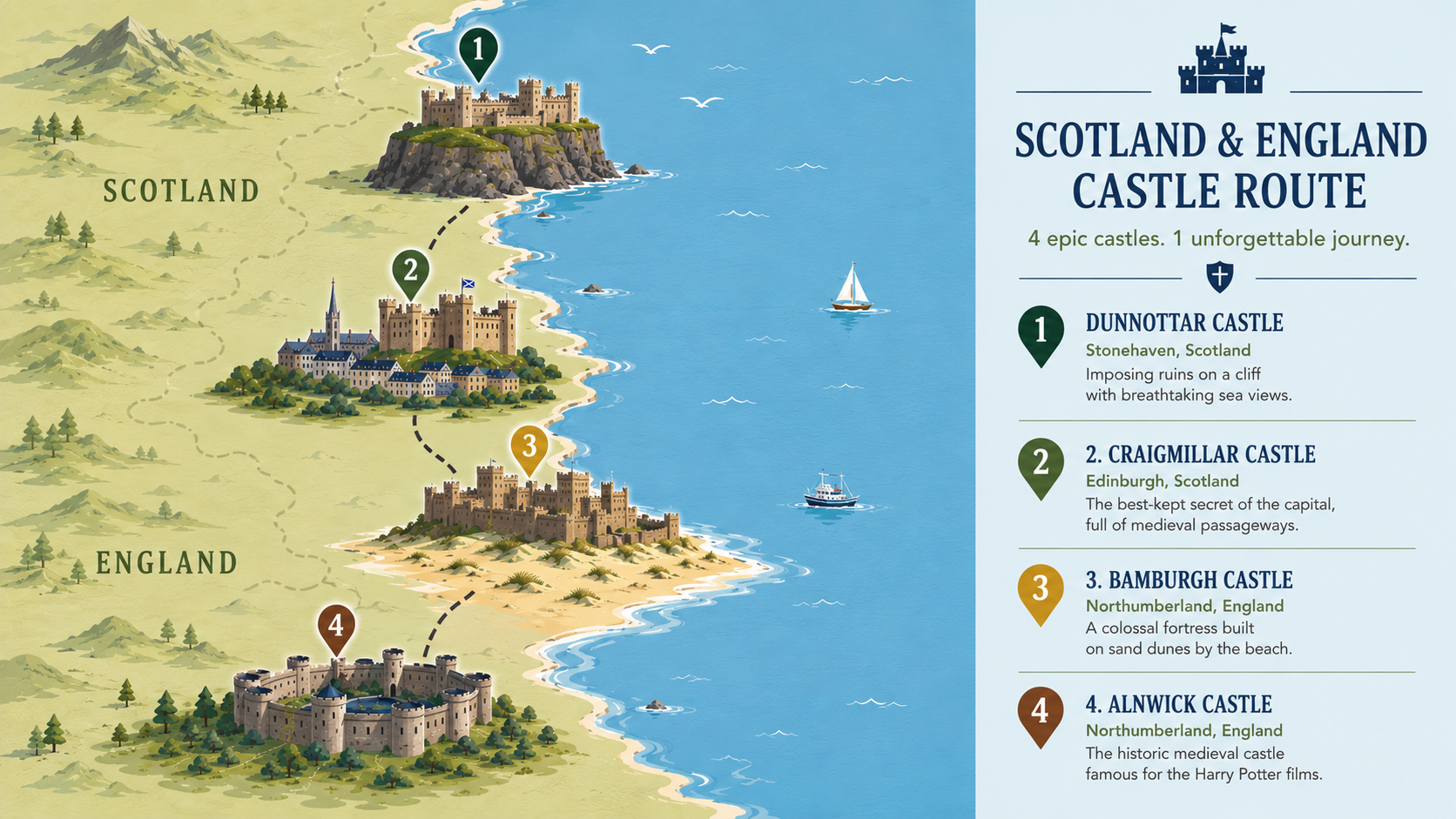
1. Dunnottar Castle – The Most Imposing Ruins on the North Sea
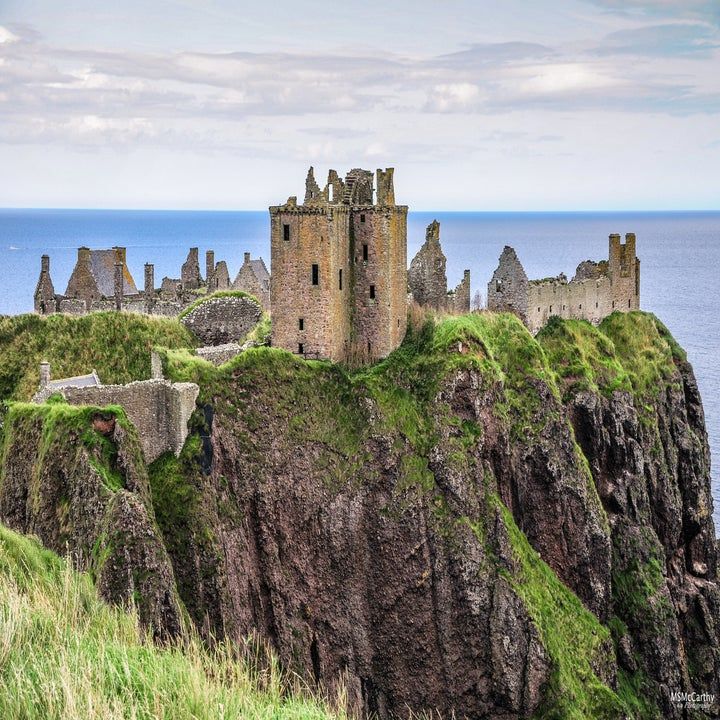
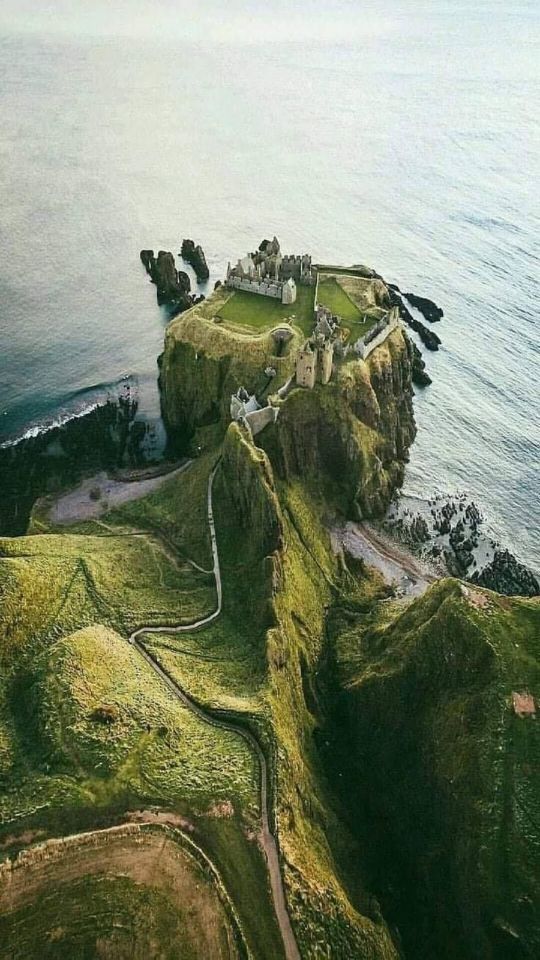
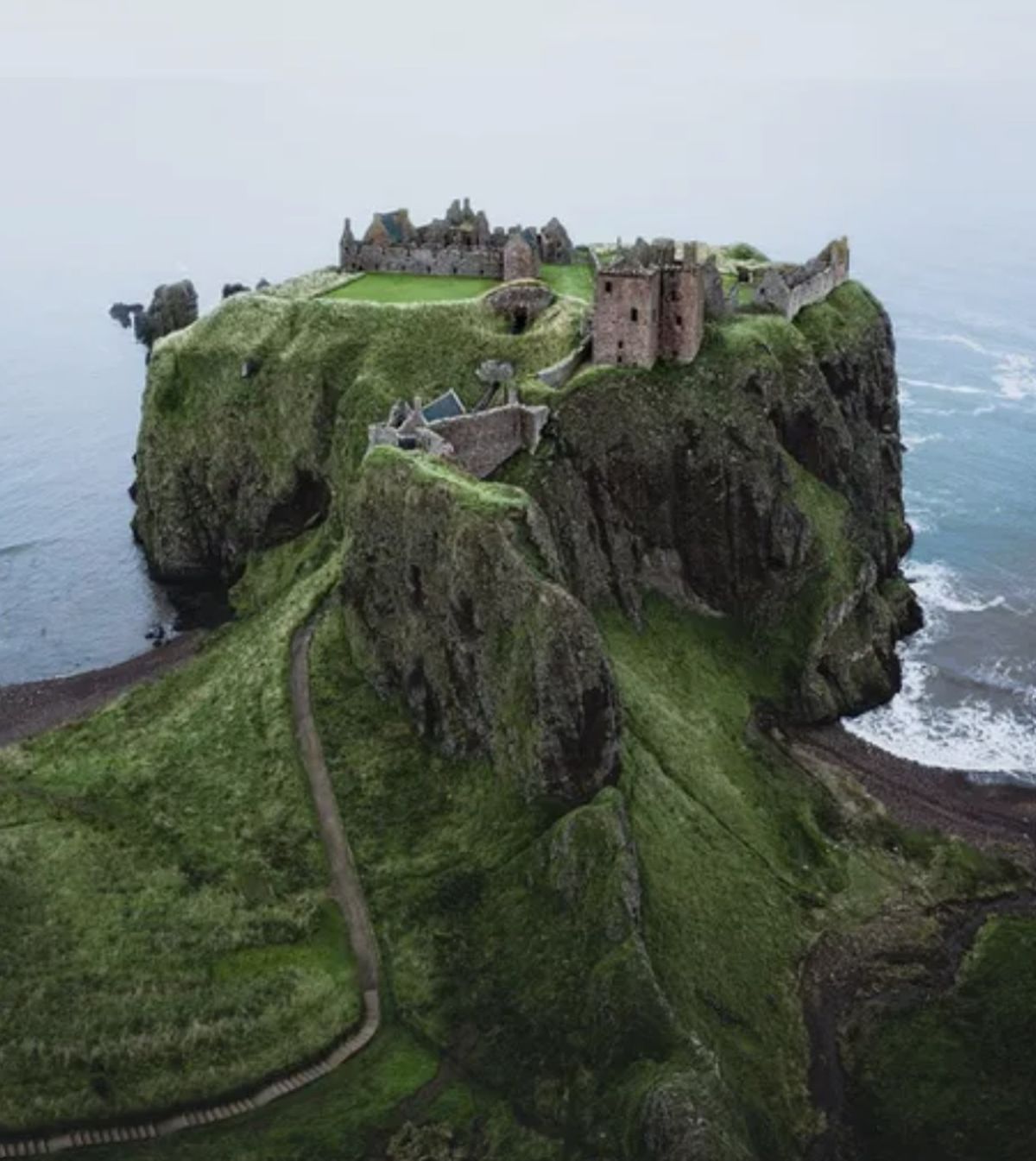
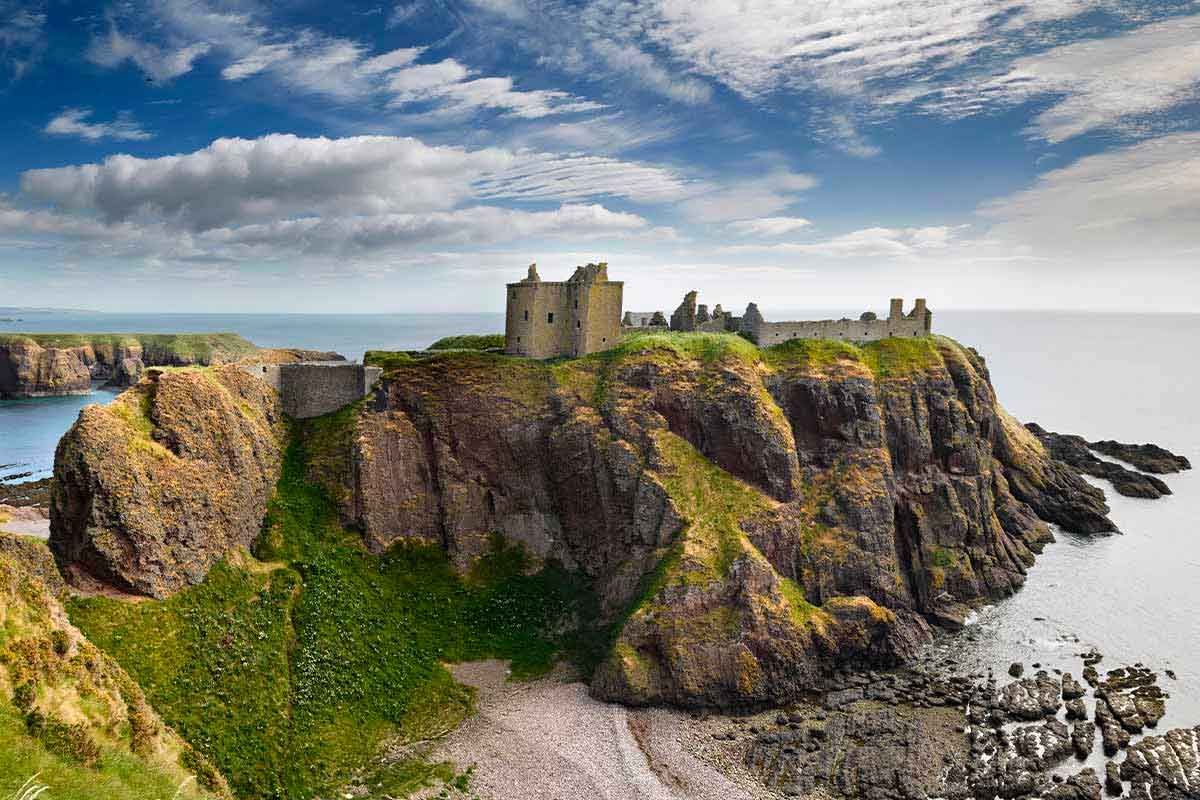
Arriving here will completely blow your mind. It is not an intact castle, but rather the dramatic ruins of a gigantic medieval fortress perched on a black rock cliff, surrounded almost entirely by the North Sea. If it happens to be windy and misty on the day of your visit, embrace it: it is the perfect atmosphere.
It withstood sieges by William Wallace and the Vikings, and walking among its crumbling walls is an unforgettable experience.
- Built: 14th–16th centuries
- Function: Strategic coastal fortress
- Condition: Cliffside ruins
- Estimated Time: 2–3 hours
- The Photo Spot: Do not just settle for the shot from the main entrance. Head down the stairs toward the stony beach on the left and walk up the opposite cliffside path. From up there, you get the complete perspective of the rocky outcrop braving the crashing waves.
- Logistics & Transport: You can take a train from Edinburgh or Glasgow to the seaside town of Stonehaven. From the station, there is a beautiful 40-minute coastal cliff walk to the castle. If you are driving, the parking lot is free but can fill up quickly around midday.
Day 3 & 4: The Secrets of Edinburgh and its Surroundings
We head south toward the capital of Scotland. Although Edinburgh Castle dominates the entire skyline, the true hidden gem for photography lies a bit further off the beaten path.
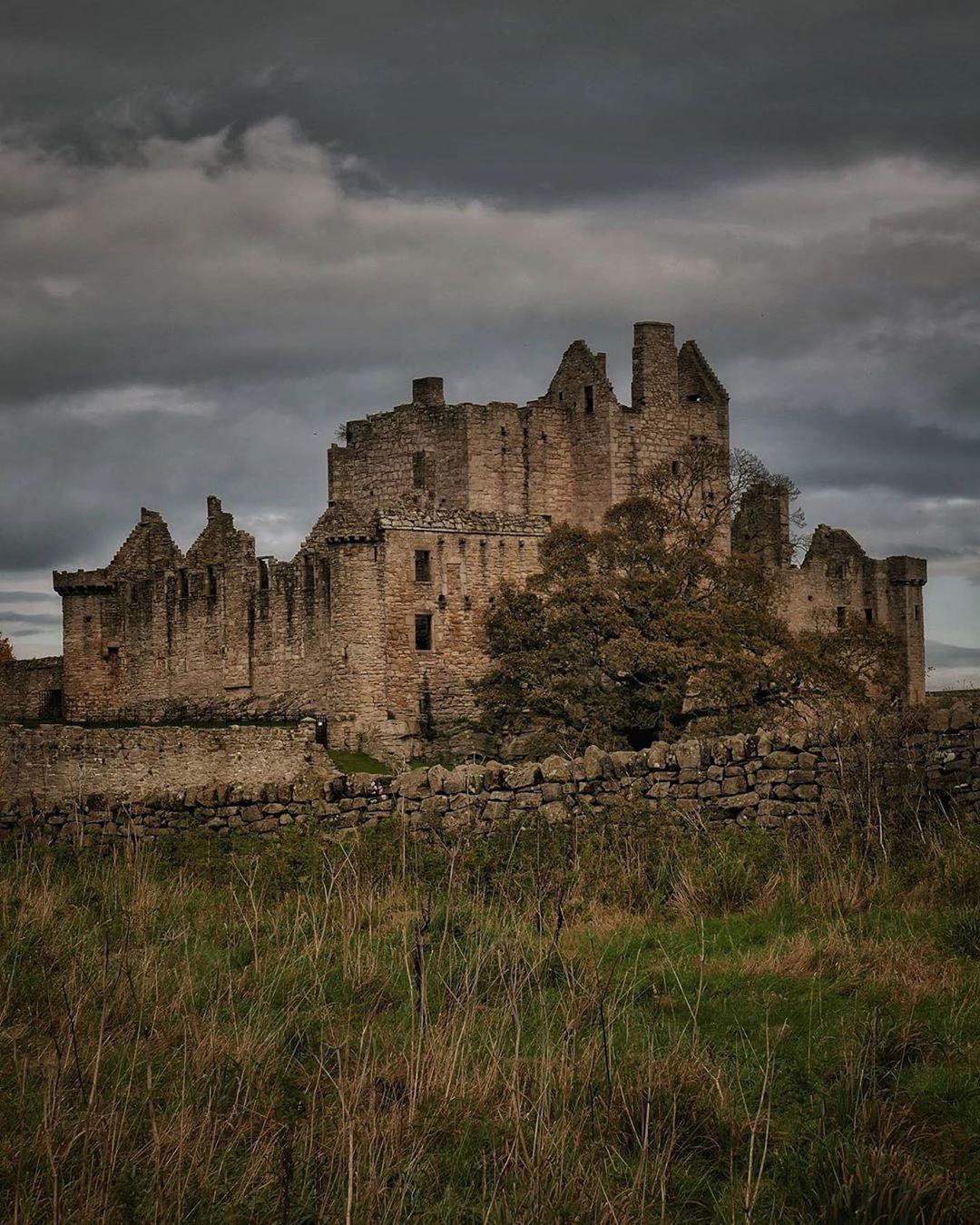
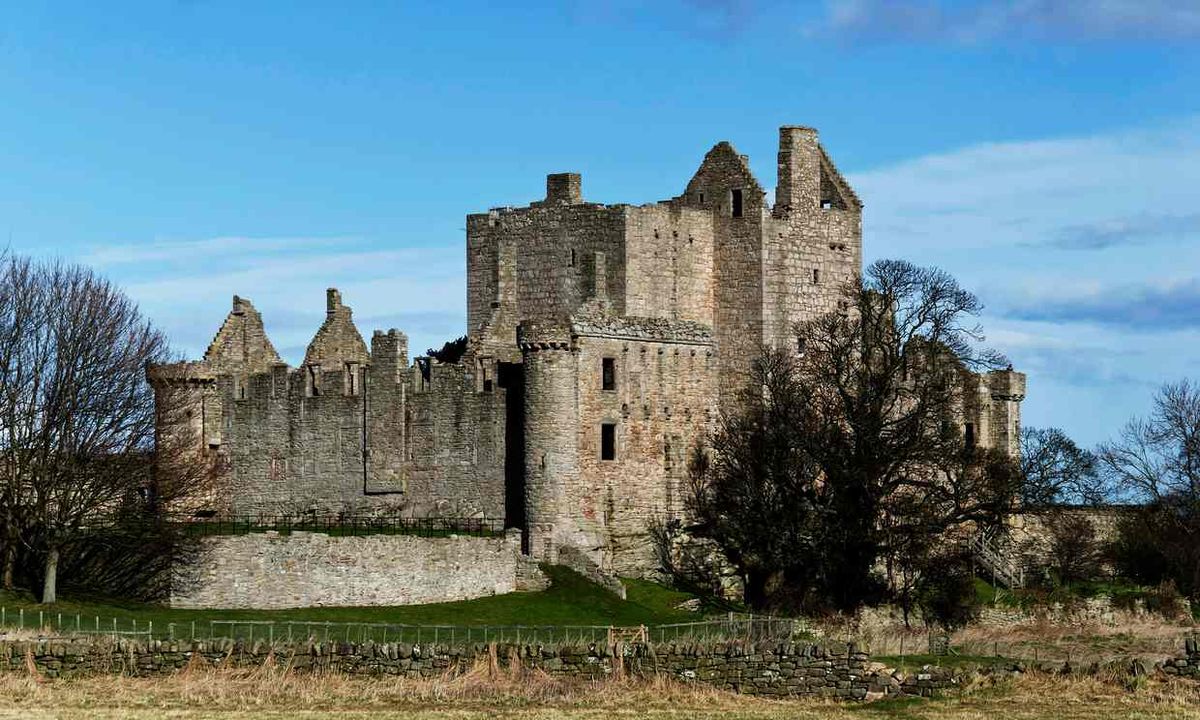
2. Craigmillar Castle – Edinburgh's Best-Kept Secret
While thousands of tourists brave endless lines and pay expensive admission fees on the Royal Mile, we are going to hop on a 15-minute urban bus ride to the south side of the city to visit Craigmillar. Known as "Edinburgh’s other castle," this 14th-century fortress boasts an incredible state of preservation. It features a labyrinth of medieval rooms, dark passageways, and a tower you can climb for sweeping views of the city with virtually no crowds.
It was a favorite retreat for Mary, Queen of Scots, and served as a key filming location for the series Outlander.
- Built: 14th century
- Function: Fortified baronial residence
- Condition: Excellently preserved
- Estimated Time: 1.5–2 hours
- The Photo Spot: In the inner courtyard, two intertwined trees have grown straight through the ancient stone walls. The symmetry they create against the backdrop of the Gothic architecture is incredible.
- Logistics & Transport: Super easy. From Edinburgh city center, local bus lines 14, 30, or 33 drop you off just a 5-minute walk from the main entrance.
Day 5 & 6: Crossing the Border into Northumberland (England)
We leave Scotland behind and enter Northern England along the coast. This border region was a bloody battleground for centuries, which explains why it is heavily fortified with colossal strongholds.
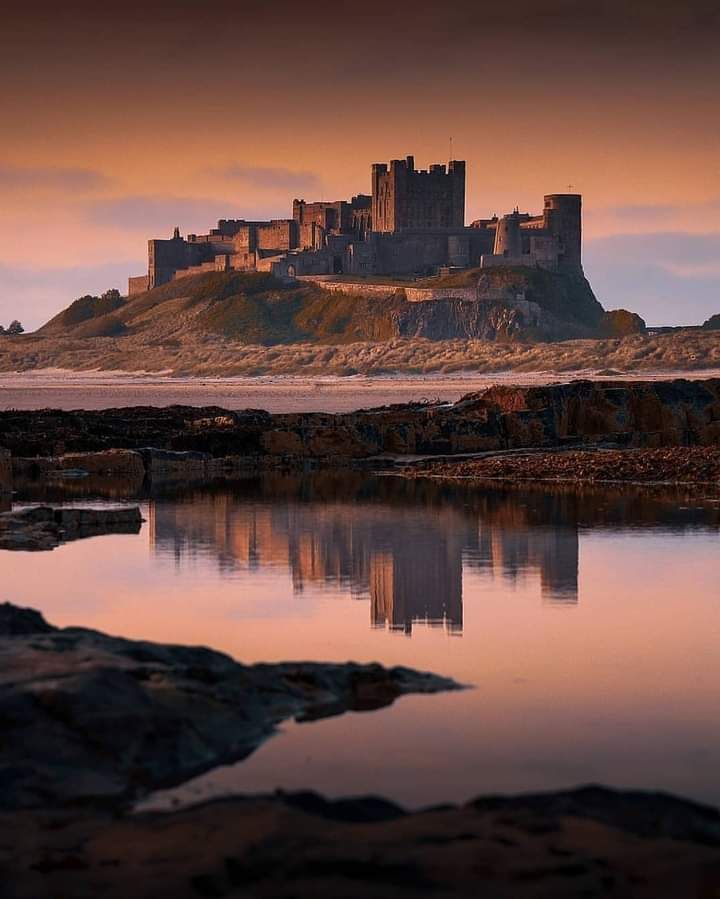
3. Bamburgh Castle – The King of the Sand Dunes
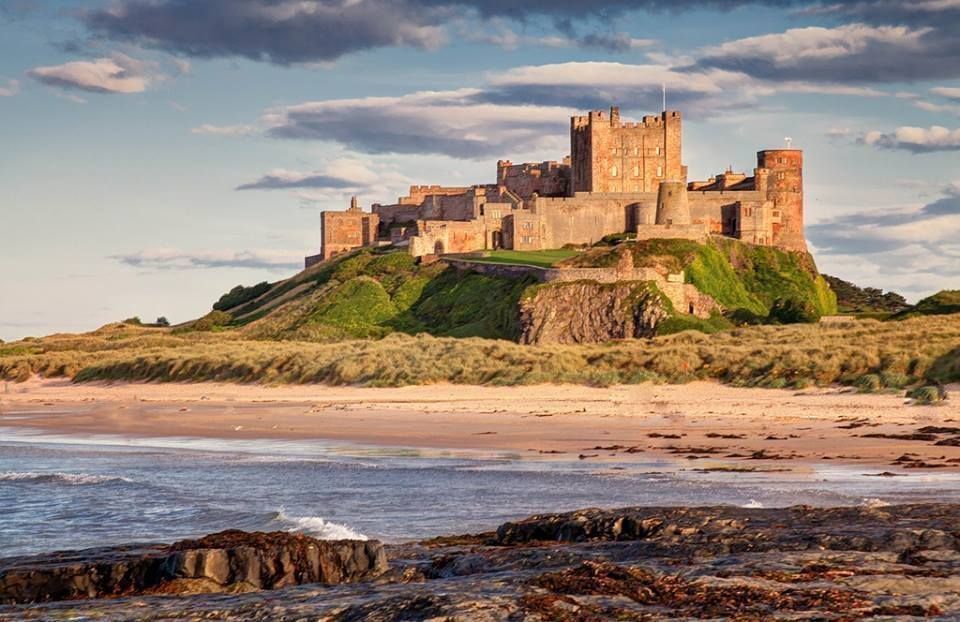
As soon as you cross the border, the landscape changes. Bamburgh is, without exaggeration, one of the largest and most majestic inhabited castles in the entire UK. It rises masterfully over a throne of volcanic rock, surrounded by miles of pristine white sandy beaches and wild dunes facing the North Sea. If you have watched the series The Last Kingdom, this place will look incredibly familiar: it is the real-life Bebbanburg.
- Built: 12th century (Norman origins)
- Function: Coastal palatial fortress
- Condition: Inhabited and fully restored
- Estimated Time: 2–3 hours
- The Photo Spot: Walk along Bamburgh beach, heading about 200 meters north. Crouch down among the sand dunes and use the coastal beach grass to frame your shot of the castle soaring above the horizon. At sunset, the stone takes on an unreal golden glow.
- Logistics & Transport: The most convenient way to get here is by car via the A1 coastal route. On public transport, you can catch a train from Newcastle to Chathill station, followed by a local bus connection (line 418).
4. Alnwick Castle – From Medieval Battles to Harry Potter Flying Lessons
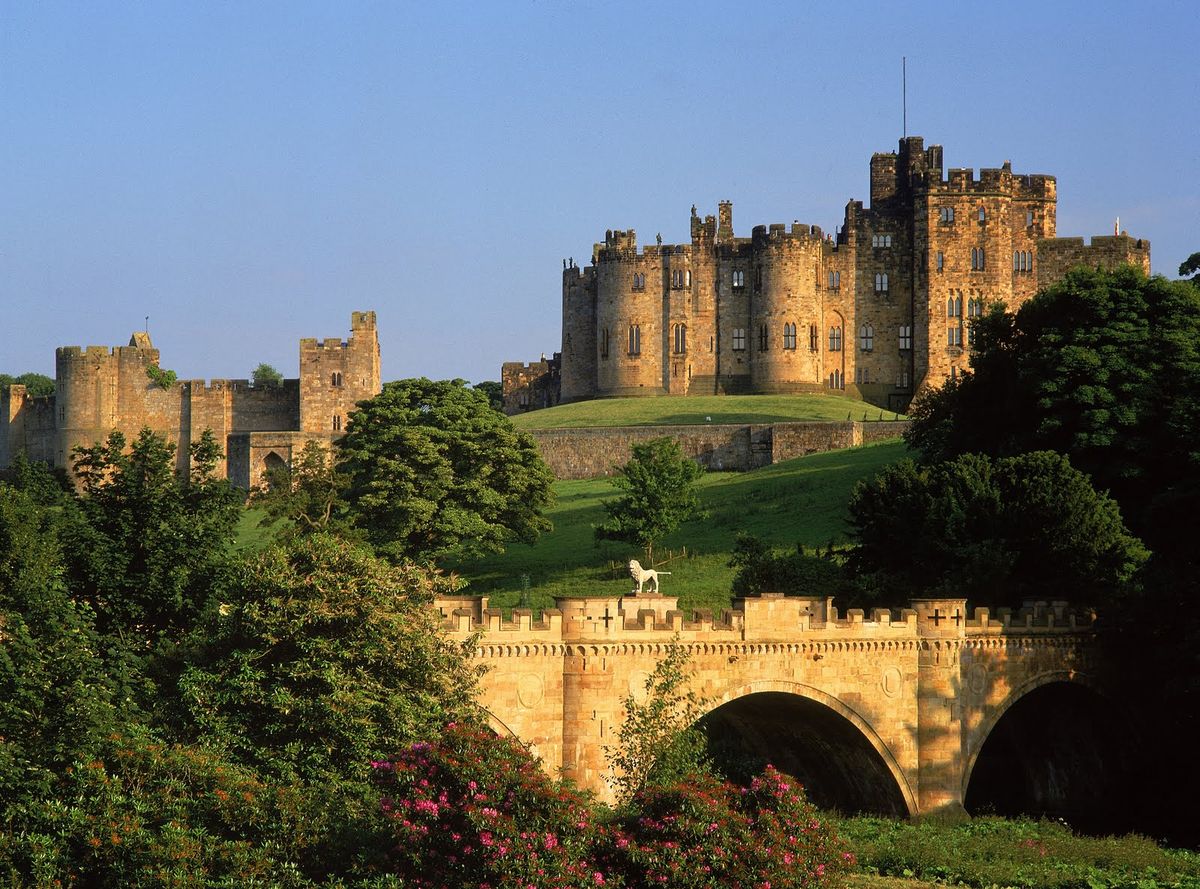
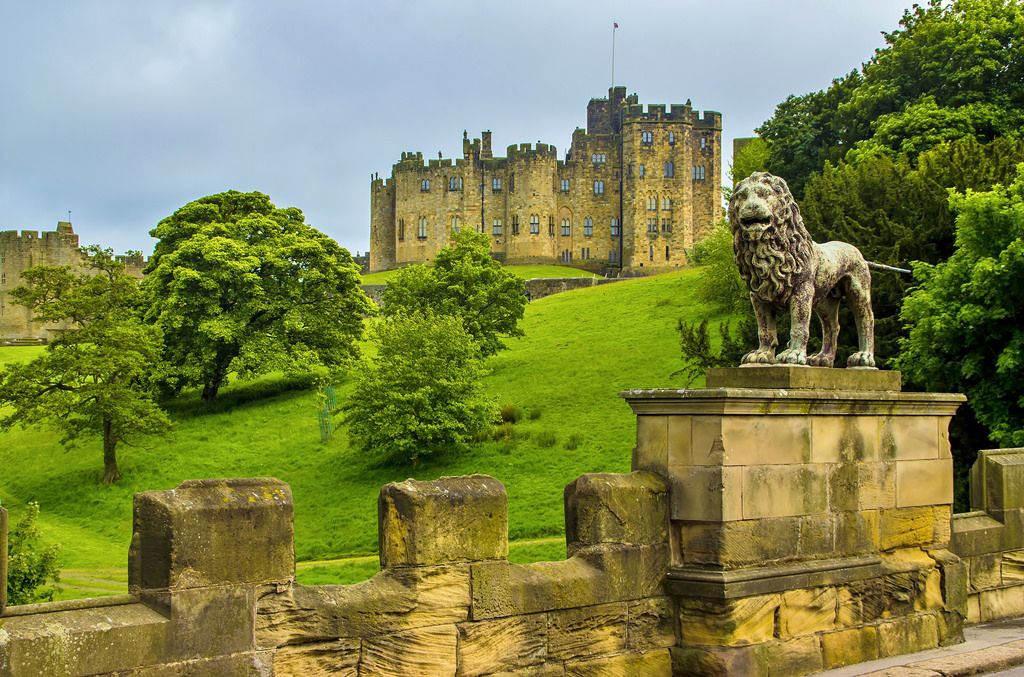
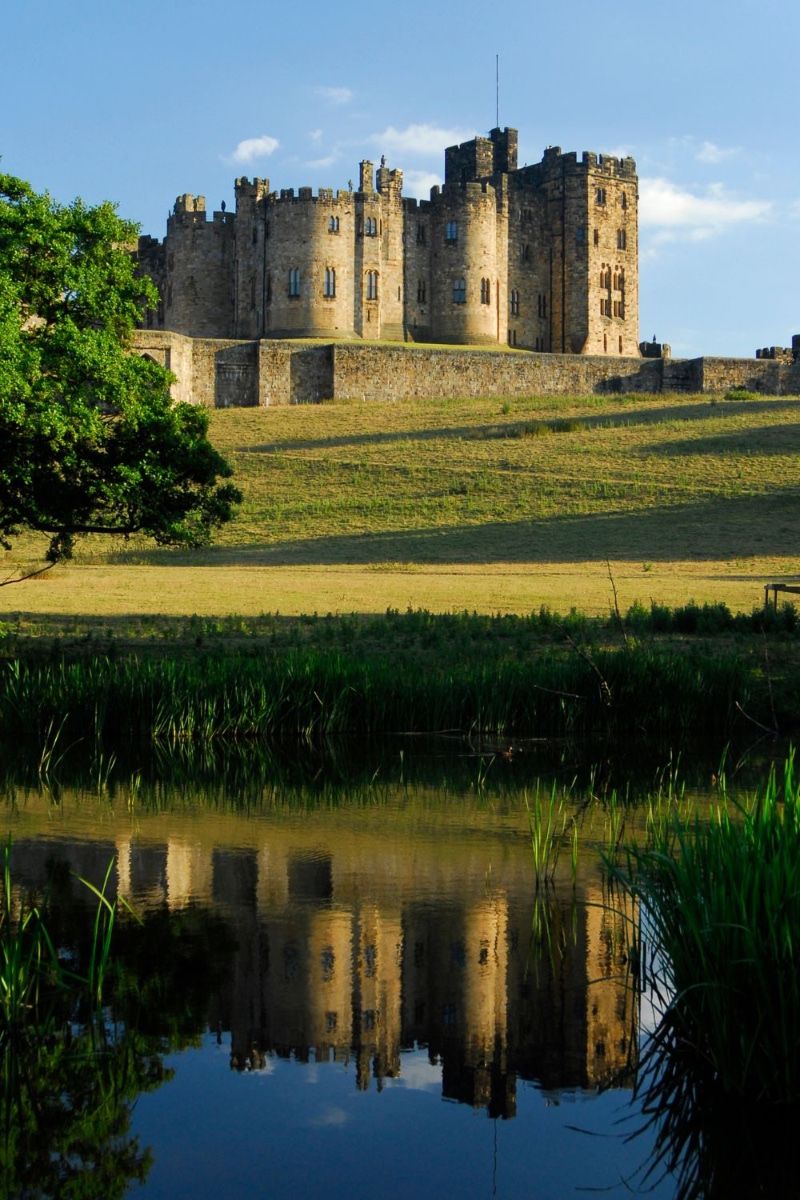
Just half an hour away from Bamburgh sits the second-largest inhabited castle in England. Alnwick seamlessly pairs imposing outer military architecture with Baroque state rooms that look like royal palaces. However, the real reason this place is a pop culture icon is because its outer courtyards were transformed into Hogwarts School of Witchcraft and Wizardry during the first two Harry Potter films. Yes, this is exactly where Harry had his very first broomstick flying lesson.
- Built: Late 11th century (Year 1096)
- Function: Ducal seat and military stronghold
- Condition: Inhabited and excellently preserved
- Estimated Time: Half day
- The Photo Spot: The inner courtyard where the "flying lessons" take place (you can join one; the staff provides wooden broomsticks) is perfect for capturing the immense scale of the medieval walls while channeling your inner Gryffindor.
- Logistics & Transport: It is perfectly connected to Newcastle. You can catch a direct bus (X15 or X20) from Haymarket Bus Station in Newcastle, which drops you off in the beautiful medieval town of Alnwick in about an hour.
Practical Tips for Your Castle Road Trip
- The Pass That Saves Your Wallet (Explorer Pass): If you plan to visit multiple castles in Scotland, do not buy individual tickets. Buy the Explorer Pass by Historic Scotland. It pays for itself after visiting just two or three sites and covers key landmarks. For the English side of the border, check out the English Heritage pass.
- Best Time for Photography: May and September are the golden months. You get plenty of daylight hours, the weather tends to offer a truce (by UK standards), and you skip the heavy summer crowds of July and August.
- Car vs. Train: City-based castles (Edinburgh, Craigmillar, Alnwick) are perfectly doable on public transport by combining trains and local buses. However, if you want to fully explore the rural stretches of Aberdeenshire or the more hidden cliffs along the Northumberland coast, renting a car for 3 or 4 days will give you total freedom.
Frequently Asked Questions About the Castle Trail
Do I need to book tickets in advance?
For Alnwick and Bamburgh, booking online is highly recommended during the peak summer season (June to August) to guarantee your entry slot and secure slight online discounts. At Craigmillar, you can easily buy your tickets at the gate upon arrival. For Dunnottar, because accessibility heavily depends on wind and weather safety, it is best to check their website or social media on the morning of your trip and purchase tickets online or at the kiosk.
Can I fly a drone at UK castles?
As a general rule, flying drones on the grounds of these castles is strictly prohibited without prior commercial permits. Both Historic Scotland (Dunnottar and Craigmillar) and the private estates of Bamburgh and Alnwick enforce very strict no-fly drone policies to ensure visitor safety and protect privacy.
Which side of the road do they drive on, and what do I need to rent a car?
Across the entire United Kingdom, driving is on the left side of the road. To rent a car in either Scotland or England, you will need a valid driver's license, your passport, and a major credit card in the primary driver's name for the security deposit hold. An International Driving Permit (IDP) is recommended but rarely mandatory as long as your national license is perfectly legible in English.
Is this route suitable for children?
Yes, absolutely! Alnwick is a massive hit with kids due to its Harry Potter themes and the interactive knight activities in the artisans' courtyard, and Bamburgh sits right next to a wide-open beach. Just keep in mind that Dunnottar requires walking up and down a significant number of steep cliffside stone steps, which can be tiring for toddlers and impossible to navigate with a stroller.
You Might Also Like
- Things to Do in Manchester 2026: Complete Guide to Football, Music, and Culture
- Things to Do in Newcastle 2026: Complete Guide to Bridges, Football, and Nightlife
- Edinburgh Travel Guide: The Perfect Itinerary for First-Timers
- Stirling: The Castle and the William Wallace Monument
- Glasgow Travel Guide
- Best 10 Beaches in Scotland
Day 1 & 2: The Wildness of Aberdeenshire (Scotland)
Our route begins in northeastern Scotland, a region famous for having its very own "Castle Trail." Right here is where we find the jewel in the crown.
1. Dunnottar Castle – The Most Imposing Ruins on the North Sea
Arriving here will completely blow your mind. It is not an intact castle, but rather the dramatic ruins of a gigantic medieval fortress perched on a black rock cliff, surrounded almost entirely by the North Sea. If it happens to be windy and misty on the day of your visit, embrace it: it is the perfect atmosphere.
It withstood sieges by William Wallace and the Vikings, and walking among its crumbling walls is an unforgettable experience.
- Built: 14th–16th centuries
- Function: Strategic coastal fortress
- Condition: Cliffside ruins
- Estimated Time: 2–3 hours
- The Photo Spot: Do not just settle for the shot from the main entrance. Head down the stairs toward the stony beach on the left and walk up the opposite cliffside path. From up there, you get the complete perspective of the rocky outcrop braving the crashing waves.
- Logistics & Transport: You can take a train from Edinburgh or Glasgow to the seaside town of Stonehaven. From the station, there is a beautiful 40-minute coastal cliff walk to the castle. If you are driving, the parking lot is free but can fill up quickly around midday.
Day 3 & 4: The Secrets of Edinburgh and its Surroundings
We head south toward the capital of Scotland. Although Edinburgh Castle dominates the entire skyline, the true hidden gem for photography lies a bit further off the beaten path.
2. Craigmillar Castle – Edinburgh's Best-Kept Secret
While thousands of tourists brave endless lines and pay expensive admission fees on the Royal Mile, we are going to hop on a 15-minute urban bus ride to the south side of the city to visit Craigmillar. Known as "Edinburgh’s other castle," this 14th-century fortress boasts an incredible state of preservation. It features a labyrinth of medieval rooms, dark passageways, and a tower you can climb for sweeping views of the city with virtually no crowds.
It was a favorite retreat for Mary, Queen of Scots, and served as a key filming location for the series Outlander.
- Built: 14th century
- Function: Fortified baronial residence
- Condition: Excellently preserved
- Estimated Time: 1.5–2 hours
- The Photo Spot: In the inner courtyard, two intertwined trees have grown straight through the ancient stone walls. The symmetry they create against the backdrop of the Gothic architecture is incredible.
- Logistics & Transport: Super easy. From Edinburgh city center, local bus lines 14, 30, or 33 drop you off just a 5-minute walk from the main entrance.
Day 5 & 6: Crossing the Border into Northumberland (England)
We leave Scotland behind and enter Northern England along the coast. This border region was a bloody battleground for centuries, which explains why it is heavily fortified with colossal strongholds.
3. Bamburgh Castle – The King of the Sand Dunes
As soon as you cross the border, the landscape changes. Bamburgh is, without exaggeration, one of the largest and most majestic inhabited castles in the entire UK. It rises masterfully over a throne of volcanic rock, surrounded by miles of pristine white sandy beaches and wild dunes facing the North Sea. If you have watched the series The Last Kingdom, this place will look incredibly familiar: it is the real-life Bebbanburg.
- Built: 12th century (Norman origins)
- Function: Coastal palatial fortress
- Condition: Inhabited and fully restored
- Estimated Time: 2–3 hours
- The Photo Spot: Walk along Bamburgh beach, heading about 200 meters north. Crouch down among the sand dunes and use the coastal beach grass to frame your shot of the castle soaring above the horizon. At sunset, the stone takes on an unreal golden glow.
- Logistics & Transport: The most convenient way to get here is by car via the A1 coastal route. On public transport, you can catch a train from Newcastle to Chathill station, followed by a local bus connection (line 418).
4. Alnwick Castle – From Medieval Battles to Harry Potter Flying Lessons
Just half an hour away from Bamburgh sits the second-largest inhabited castle in England. Alnwick seamlessly pairs imposing outer military architecture with Baroque state rooms that look like royal palaces. However, the real reason this place is a pop culture icon is because its outer courtyards were transformed into Hogwarts School of Witchcraft and Wizardry during the first two Harry Potter films. Yes, this is exactly where Harry had his very first broomstick flying lesson.
- Built: Late 11th century (Year 1096)
- Function: Ducal seat and military stronghold
- Condition: Inhabited and excellently preserved
- Estimated Time: Half day
- The Photo Spot: The inner courtyard where the "flying lessons" take place (you can join one; the staff provides wooden broomsticks) is perfect for capturing the immense scale of the medieval walls while channeling your inner Gryffindor.
- Logistics & Transport: It is perfectly connected to Newcastle. You can catch a direct bus (X15 or X20) from Haymarket Bus Station in Newcastle, which drops you off in the beautiful medieval town of Alnwick in about an hour.
PUBLICIDAD
Travel with Data: Get your Saily eSIM
- ✓Internet in seconds upon landing
- ✓Flexible plans in 180+ countries
- ✓Easy setup directly via the App
- The Pass That Saves Your Wallet (Explorer Pass): If you plan to visit multiple castles in Scotland, do not buy individual tickets. Buy the Explorer Pass by Historic Scotland. It pays for itself after visiting just two or three sites and covers key landmarks. For the English side of the border, check out the English Heritage pass.
- Best Time for Photography: May and September are the golden months. You get plenty of daylight hours, the weather tends to offer a truce (by UK standards), and you skip the heavy summer crowds of July and August.
- Car vs. Train: City-based castles (Edinburgh, Craigmillar, Alnwick) are perfectly doable on public transport by combining trains and local buses. However, if you want to fully explore the rural stretches of Aberdeenshire or the more hidden cliffs along the Northumberland coast, renting a car for 3 or 4 days will give you total freedom.
Do I need to book tickets in advance?
For Alnwick and Bamburgh, booking online is highly recommended during the peak summer season (June to August) to guarantee your entry slot and secure slight online discounts. At Craigmillar, you can easily buy your tickets at the gate upon arrival. For Dunnottar, because accessibility heavily depends on wind and weather safety, it is best to check their website or social media on the morning of your trip and purchase tickets online or at the kiosk.
Can I fly a drone at UK castles?
As a general rule, flying drones on the grounds of these castles is strictly prohibited without prior commercial permits. Both Historic Scotland (Dunnottar and Craigmillar) and the private estates of Bamburgh and Alnwick enforce very strict no-fly drone policies to ensure visitor safety and protect privacy.
Which side of the road do they drive on, and what do I need to rent a car?
Across the entire United Kingdom, driving is on the left side of the road. To rent a car in either Scotland or England, you will need a valid driver's license, your passport, and a major credit card in the primary driver's name for the security deposit hold. An International Driving Permit (IDP) is recommended but rarely mandatory as long as your national license is perfectly legible in English.
Is this route suitable for children?
Yes, absolutely! Alnwick is a massive hit with kids due to its Harry Potter themes and the interactive knight activities in the artisans' courtyard, and Bamburgh sits right next to a wide-open beach. Just keep in mind that Dunnottar requires walking up and down a significant number of steep cliffside stone steps, which can be tiring for toddlers and impossible to navigate with a stroller.
PUBLICIDAD
- Things to Do in Manchester 2026: Complete Guide to Football, Music, and Culture
- Things to Do in Newcastle 2026: Complete Guide to Bridges, Football, and Nightlife
- Edinburgh Travel Guide: The Perfect Itinerary for First-Timers
- Stirling: The Castle and the William Wallace Monument
- Glasgow Travel Guide
- Best 10 Beaches in Scotland
Galery
PUBLICIDAD
International Travel Insurance
- ✓International medical insurance
- ✓24/7 immediate assistance in your language
- ✓Ideal for trekking & adventure
Preferences
Language
Color
Text
Width