Table of contents and map
University of Glasgow: How to Visit the Cloisters, Campus, and Free Museums
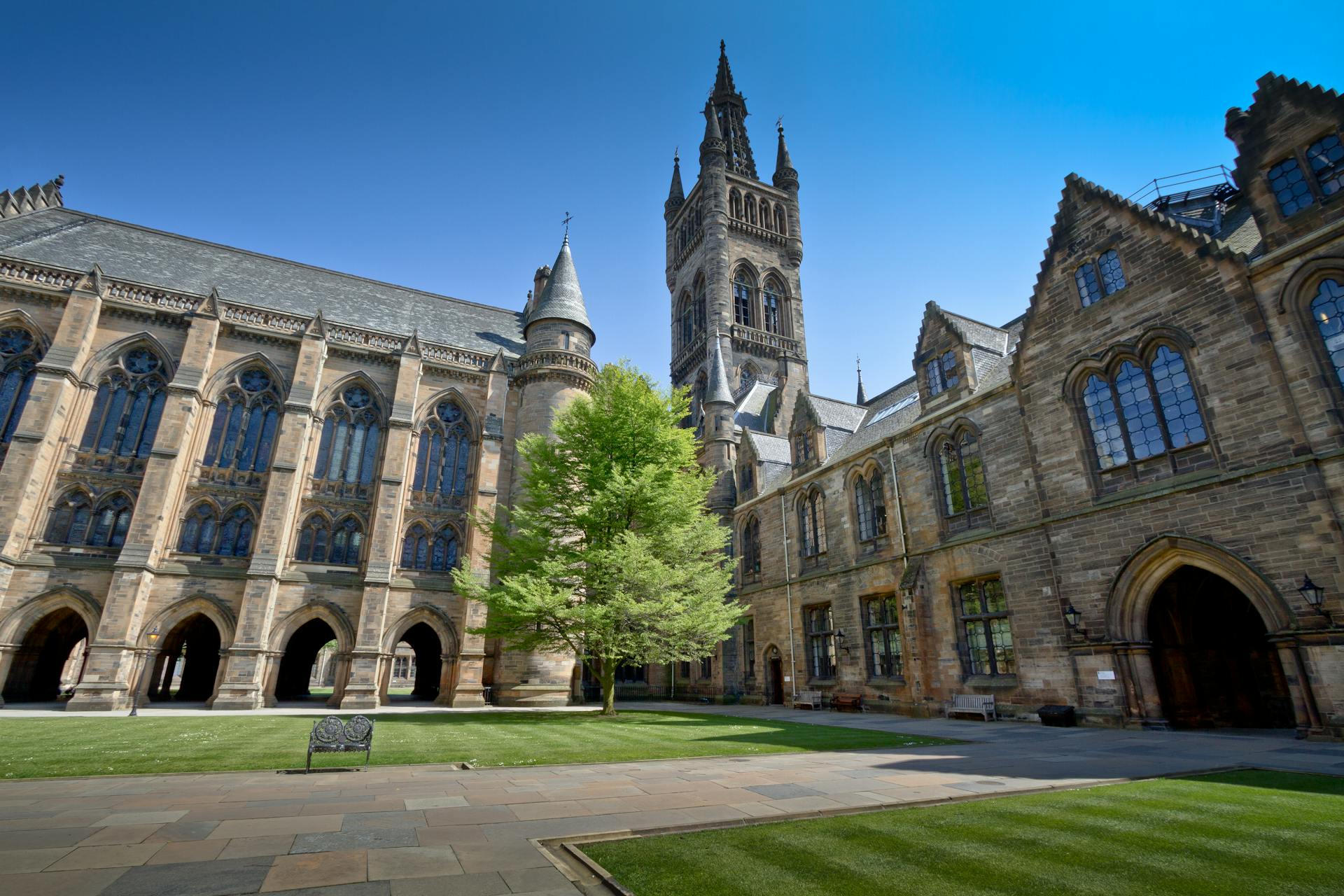
Founded in 1451, the University of Glasgow is the fourth-oldest university in the English-speaking world. Its main campus in the West End, crowned by Sir George Gilbert Scott's magnificent Neo-Gothic building, looks straight out of a fairy tale. Lose yourself under the Gothic arches of its famous Cloisters, discover scientific legacy in its free museums, and breathe in the vibrant student life of this magical corner.
University of Glasgow: How to Visit the Cloisters, Campus, and Free Museums
Founded in 1451, the University of Glasgow is the fourth-oldest university in the English-speaking world. Its main campus in the West End, crowned by Sir George Gilbert Scott's magnificent Neo-Gothic building, looks straight out of a fairy tale. Lose yourself under the Gothic arches of its famous Cloisters, discover scientific legacy in its free museums, and breathe in the vibrant student life of this magical corner.
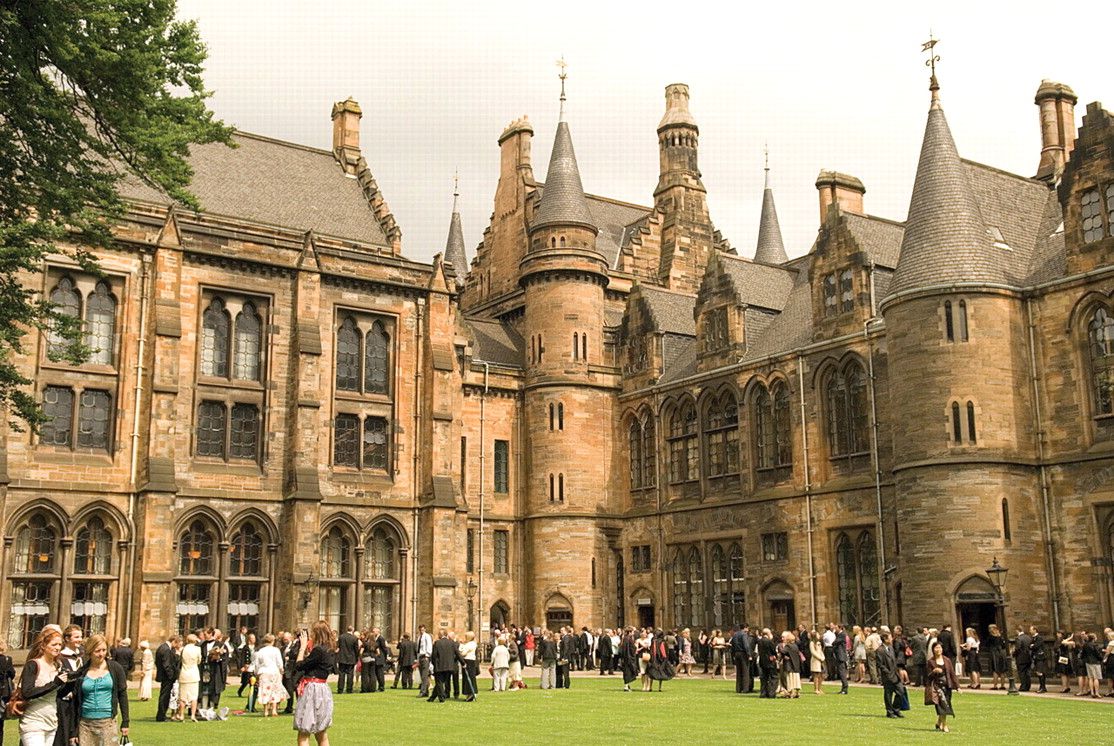
If there is one place in the West End capable of taking your breath away, it is the campus of the University of Glasgow. With over 570 years of history, this prestigious institution stands out not only for its academic excellence—brilliant minds like Adam Smith, Lord Kelvin, and James Watt once walked its halls—but also for having one of the most stunning and photogenic campuses in the world.
The soul of the campus is the Gilbert Scott Building, a massive 19th-century Neo-Gothic masterpiece featuring a spire that dominates the city skyline. Strolling through its cobblestone courtyards and medieval-style corridors is a magical experience and, best of all, you can explore the outdoor campus and its cloisters completely free of charge.
What to See at the University of Glasgow: The Essentials
The campus is huge and packed with charming little corners. When you visit, make sure you don't miss these key spots:
1. The Cloisters (The "Harry Potter" Cloisters)
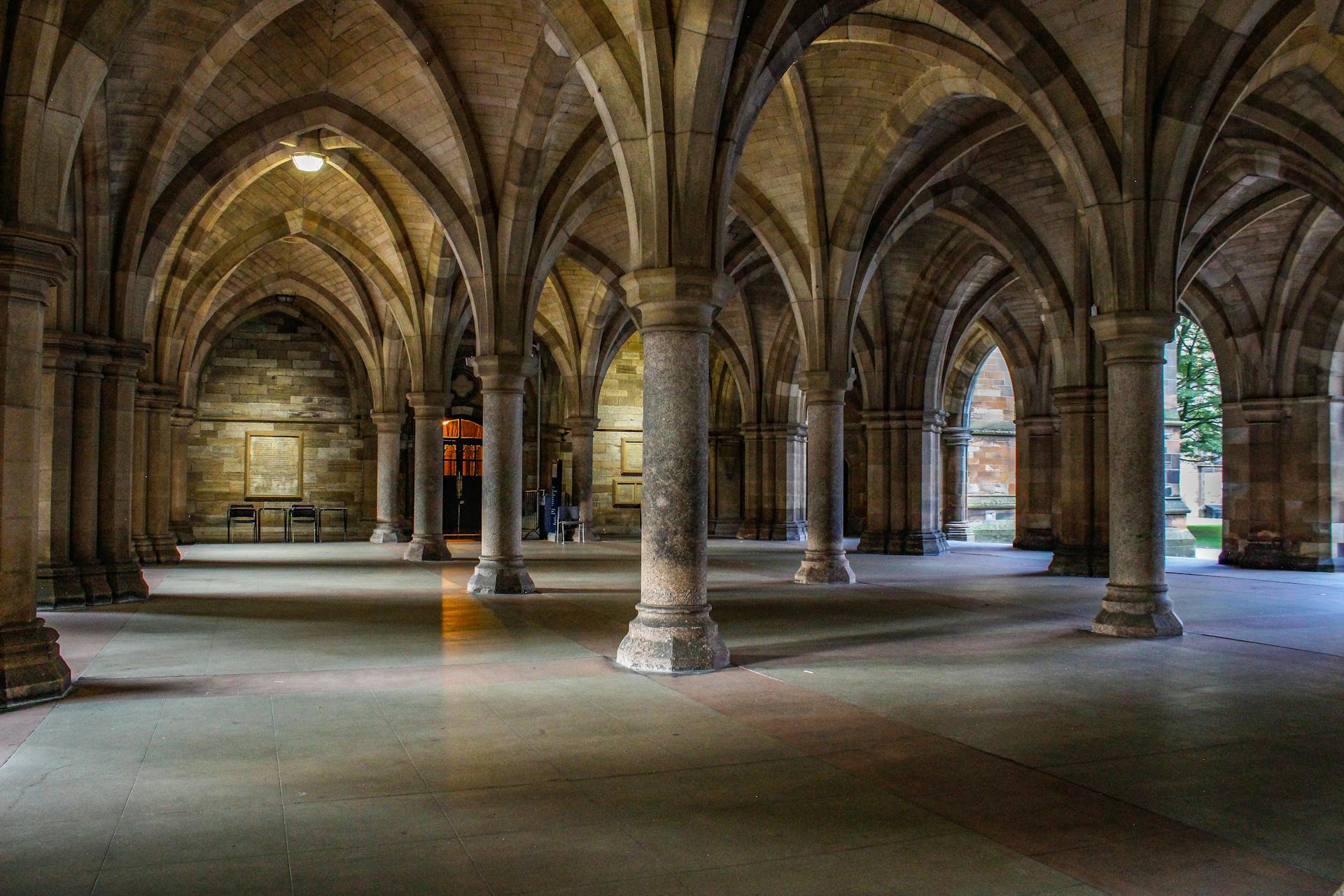
Officially known as The Undercroft, these iconic fluted stone arches connect the east and west quadrangles of the university. The play of light and shadow beneath its ribbed vaults creates an atmosphere so solemn and mysterious that it will instantly make you feel like you are inside Hogwarts Castle.
Although no scenes from Harry Potter were ever filmed here (a very common urban myth), it has served as a filming location for famous productions such as Outlander (standing in for Harvard University) and the movie Cloud Atlas.
Photography Tip: If you want to take photos of the cloisters completely empty, your best bet is to go early on a Saturday or Sunday morning, when there are no classes and very little student activity.
2. The Inner Courtyards (East and West Quadrangles)
Walking through the Cloisters brings you out into two spacious, perfectly manicured lawns surrounded by the dark stone facades of the main building. The contrast between the green grass and the Victorian Gothic architecture is spectacular. From the West Quadrangle, you can admire the base of the grand clock tower up close.
3. The Hunterian Museum
Located inside the Gilbert Scott Building itself, it is the oldest public museum in Scotland (founded in 1807). It opened thanks to the legacy of anatomist William Hunter, who donated his colossal personal collection to the university.
In its main gallery (which is free to enter), you will find everything from dinosaur fossils and Egyptian mummies to a fantastic exhibition on the Antonine Wall (the Roman frontier in Scotland).
4. The Hunterian Art Gallery and The Mackintosh House
Located just across Hillhead Street, right opposite the modern library, you will find the Hunterian Art Gallery. Alongside masterpieces by Rembrandt and the Glasgow Boys, this building houses The Mackintosh House—a meticulous and exact reconstruction of the home of the celebrated local architect Charles Rennie Mackintosh and his wife Margaret Macdonald.
Note: While admission to the art gallery is free, entering The Mackintosh House requires a paid ticket (around £10 for adults).
Campus Ticket Prices and Admission
Visiting and walking around the university grounds, the lawns, the Cloisters, and the Hunterian Museum is 100% free. You do not need to purchase any tickets or book in advance to explore the campus on your own.
Historical Guided Tours
If you want to dive deeper into the history and legends, and gain access to areas normally closed to the public (such as the Memorial Chapel or Bute Hall), you can join the official historical tours organized by the Students' Representative Council (SRC).
- Schedule: Tours usually depart Tuesday through Sunday at 2:00 PM from the East Undercroft (right next to the campus gift shop).
- Price: Adults £11.00 / Concessions and students £9.00 / Children under 5 free. It is highly recommended to book tickets online in advance via Eventbrite.
Opening Hours
The outdoor campus and the cloisters are open virtually all the time, but if you want to visit the interiors and museums, keep the following hours in mind:
- Campus and Cloisters: Open daily (weekends offer full pedestrian access to the courtyards and cloisters).
- Hunterian Museum and Art Gallery: Open Tuesday to Sunday from 10:00 AM to 5:00 PM (closed on Mondays).
How to Get to the University of Glasgow
Located in the Hillhead neighborhood of the West End, getting here from the city center is incredibly simple:
- By Subway (Recommended): Take the circular subway line from the city center (Buchanan Street or St Enoch stations) and get off at Hillhead station. Upon exiting onto Byres Road, you are just a pleasant 5 to 10-minute walk from the historic campus.
- By Bus: First Bus routes 4 and 4A run from the city center and stop directly on University Avenue, right in front of the main campus entrance.
- On Foot: If the weather permits, you can take a 35-40 minute walk from the city center, cutting through the beautiful wooded paths of Kelvingrove Park. It is a gorgeous route that climbs up the hill, rewarding you with spectacular views of the Neo-Gothic building as you approach.
Practical Tips for Your Visit
- Avoid peak lecture hours: If you visit during the academic year (September to May), the campus hums with thousands of students from Monday to Friday. To enjoy the cloisters in peace and snap great photos, aim for late afternoon or the weekend.
- Parking (If you go by car): Parking inside the campus grounds is heavily restricted from Monday to Friday and requires university permits. However, during weekends (Saturdays and Sundays), free parking is generally permitted on campus grounds without a permit. If you visit on a weekday, your best option is to use pay-and-display parking on surrounding streets like University Avenue, or use the Lilybank underground car park near Hillhead subway station.
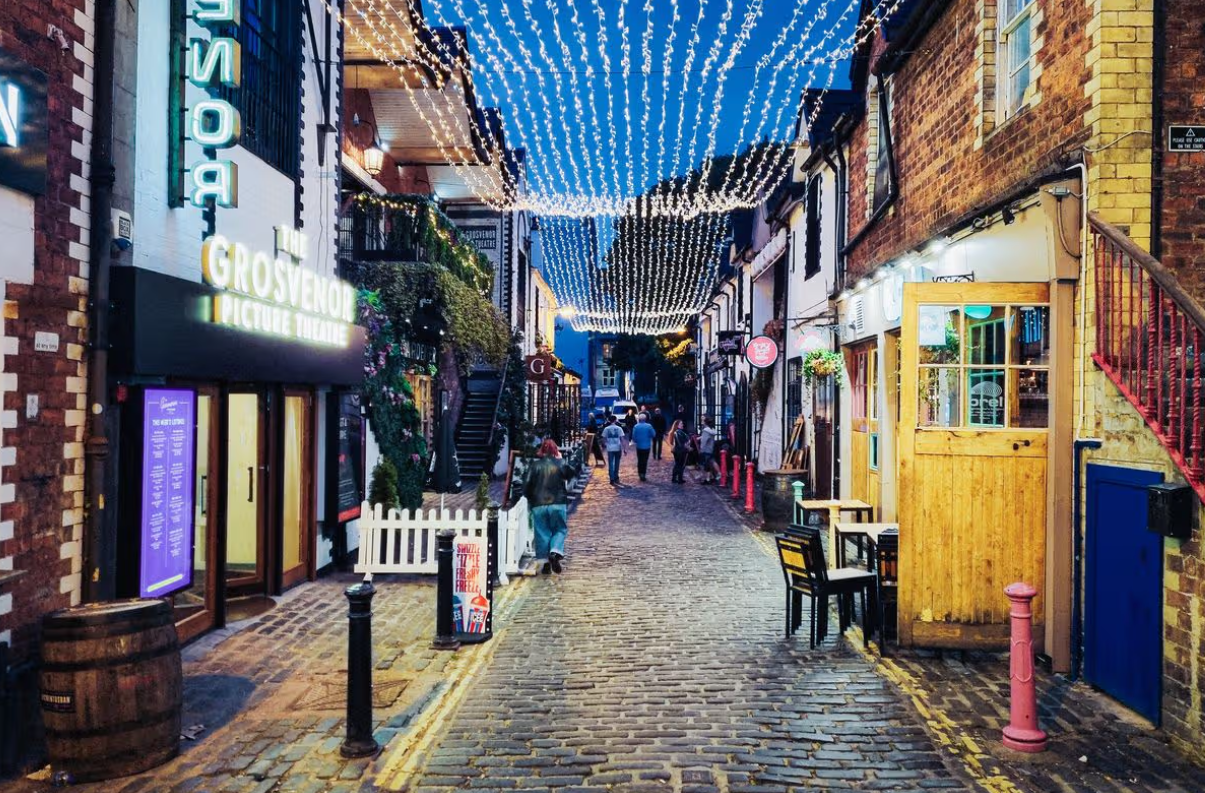
- Where to eat: Byres Road (the main artery of the West End) is packed with specialty coffee shops, student pubs, and incredible restaurants. Make sure to check out the nearby and picturesque cobbled lane of Ashton Lane for a pint or a bite to eat after your visit.
Frequently Asked Questions (FAQ)
Was this building actually the inspiration for Hogwarts in Harry Potter?
Officially, J.K. Rowling has never confirmed that the University of Glasgow served as a direct inspiration for Hogwarts (unlike several schools and streets in Edinburgh). However, the visual resemblance of the Gilbert Scott Building, its twin courtyards, and the Gothic arches of the Cloisters is so striking that it is impossible not to make the connection. It is the closest you will get to feeling like a magic student!
Can you freely enter the classrooms and internal corridors?
External visitors are allowed free access to public outdoor areas (like courtyards, pathways, and the Cloisters), as well as the museum zones. However, the corridors leading to staff offices, lecture theatres, laboratories, and the main university library require student or staff ID cards to enter, out of respect for daily academic activities.
What other museums are inside the university?
In addition to the main Hunterian Museum and Art Gallery, the campus features the Zoology Museum, which displays a massive collection of fauna, insects, and reptiles (ideal if you are traveling with kids). There is also the historic Anatomy Museum, though the latter has much more restricted public access due to research and medical ethics.
Are there official souvenir shops on campus?
Yes. Inside the Gilbert Scott Building itself (in the East Undercroft area, near the entrance to the cloisters), you will find the University Gift Shop. It is the perfect place to buy official university merchandise, such as classic university sweaters, scarves featuring the institution's official tartan, mugs, and stationery.
Useful Links to Keep Building Your Scotland Itinerary
- Glasgow: the ultimate guide to discovering the most vibrant city
- Kelvingrove Museum: Dalí masterpieces and free treasures in the West End
- Glasgow Cathedral and the Necropolis: Historic guide and legends
- Ashton Lane and the West End: Glasgow's most photogenic spot
- Glasgow Mural Trail
- The Riverside Museum
- Edinburgh step by step: the ultimate guide to squeezing the capital
The campus is huge and packed with charming little corners. When you visit, make sure you don't miss these key spots:
1. The Cloisters (The "Harry Potter" Cloisters)
Officially known as The Undercroft, these iconic fluted stone arches connect the east and west quadrangles of the university. The play of light and shadow beneath its ribbed vaults creates an atmosphere so solemn and mysterious that it will instantly make you feel like you are inside Hogwarts Castle.
Although no scenes from Harry Potter were ever filmed here (a very common urban myth), it has served as a filming location for famous productions such as Outlander (standing in for Harvard University) and the movie Cloud Atlas.
Photography Tip: If you want to take photos of the cloisters completely empty, your best bet is to go early on a Saturday or Sunday morning, when there are no classes and very little student activity.
2. The Inner Courtyards (East and West Quadrangles)
Walking through the Cloisters brings you out into two spacious, perfectly manicured lawns surrounded by the dark stone facades of the main building. The contrast between the green grass and the Victorian Gothic architecture is spectacular. From the West Quadrangle, you can admire the base of the grand clock tower up close.
3. The Hunterian Museum
Located inside the Gilbert Scott Building itself, it is the oldest public museum in Scotland (founded in 1807). It opened thanks to the legacy of anatomist William Hunter, who donated his colossal personal collection to the university.
In its main gallery (which is free to enter), you will find everything from dinosaur fossils and Egyptian mummies to a fantastic exhibition on the Antonine Wall (the Roman frontier in Scotland).
4. The Hunterian Art Gallery and The Mackintosh House
Located just across Hillhead Street, right opposite the modern library, you will find the Hunterian Art Gallery. Alongside masterpieces by Rembrandt and the Glasgow Boys, this building houses The Mackintosh House—a meticulous and exact reconstruction of the home of the celebrated local architect Charles Rennie Mackintosh and his wife Margaret Macdonald.
Note: While admission to the art gallery is free, entering The Mackintosh House requires a paid ticket (around £10 for adults).
PUBLICIDAD
Travel with Data: Get your Saily eSIM
- ✓Internet in seconds upon landing
- ✓Flexible plans in 180+ countries
- ✓Easy setup directly via the App
Visiting and walking around the university grounds, the lawns, the Cloisters, and the Hunterian Museum is 100% free. You do not need to purchase any tickets or book in advance to explore the campus on your own.
Historical Guided Tours
If you want to dive deeper into the history and legends, and gain access to areas normally closed to the public (such as the Memorial Chapel or Bute Hall), you can join the official historical tours organized by the Students' Representative Council (SRC).
- Schedule: Tours usually depart Tuesday through Sunday at 2:00 PM from the East Undercroft (right next to the campus gift shop).
- Price: Adults £11.00 / Concessions and students £9.00 / Children under 5 free. It is highly recommended to book tickets online in advance via Eventbrite.
The outdoor campus and the cloisters are open virtually all the time, but if you want to visit the interiors and museums, keep the following hours in mind:
- Campus and Cloisters: Open daily (weekends offer full pedestrian access to the courtyards and cloisters).
- Hunterian Museum and Art Gallery: Open Tuesday to Sunday from 10:00 AM to 5:00 PM (closed on Mondays).
Located in the Hillhead neighborhood of the West End, getting here from the city center is incredibly simple:
- By Subway (Recommended): Take the circular subway line from the city center (Buchanan Street or St Enoch stations) and get off at Hillhead station. Upon exiting onto Byres Road, you are just a pleasant 5 to 10-minute walk from the historic campus.
- By Bus: First Bus routes 4 and 4A run from the city center and stop directly on University Avenue, right in front of the main campus entrance.
- On Foot: If the weather permits, you can take a 35-40 minute walk from the city center, cutting through the beautiful wooded paths of Kelvingrove Park. It is a gorgeous route that climbs up the hill, rewarding you with spectacular views of the Neo-Gothic building as you approach.
- Avoid peak lecture hours: If you visit during the academic year (September to May), the campus hums with thousands of students from Monday to Friday. To enjoy the cloisters in peace and snap great photos, aim for late afternoon or the weekend.
- Parking (If you go by car): Parking inside the campus grounds is heavily restricted from Monday to Friday and requires university permits. However, during weekends (Saturdays and Sundays), free parking is generally permitted on campus grounds without a permit. If you visit on a weekday, your best option is to use pay-and-display parking on surrounding streets like University Avenue, or use the Lilybank underground car park near Hillhead subway station.
- Where to eat: Byres Road (the main artery of the West End) is packed with specialty coffee shops, student pubs, and incredible restaurants. Make sure to check out the nearby and picturesque cobbled lane of Ashton Lane for a pint or a bite to eat after your visit.
Was this building actually the inspiration for Hogwarts in Harry Potter?
Officially, J.K. Rowling has never confirmed that the University of Glasgow served as a direct inspiration for Hogwarts (unlike several schools and streets in Edinburgh). However, the visual resemblance of the Gilbert Scott Building, its twin courtyards, and the Gothic arches of the Cloisters is so striking that it is impossible not to make the connection. It is the closest you will get to feeling like a magic student!
Can you freely enter the classrooms and internal corridors?
External visitors are allowed free access to public outdoor areas (like courtyards, pathways, and the Cloisters), as well as the museum zones. However, the corridors leading to staff offices, lecture theatres, laboratories, and the main university library require student or staff ID cards to enter, out of respect for daily academic activities.
What other museums are inside the university?
In addition to the main Hunterian Museum and Art Gallery, the campus features the Zoology Museum, which displays a massive collection of fauna, insects, and reptiles (ideal if you are traveling with kids). There is also the historic Anatomy Museum, though the latter has much more restricted public access due to research and medical ethics.
Are there official souvenir shops on campus?
Yes. Inside the Gilbert Scott Building itself (in the East Undercroft area, near the entrance to the cloisters), you will find the University Gift Shop. It is the perfect place to buy official university merchandise, such as classic university sweaters, scarves featuring the institution's official tartan, mugs, and stationery.
PUBLICIDAD
- Glasgow: the ultimate guide to discovering the most vibrant city
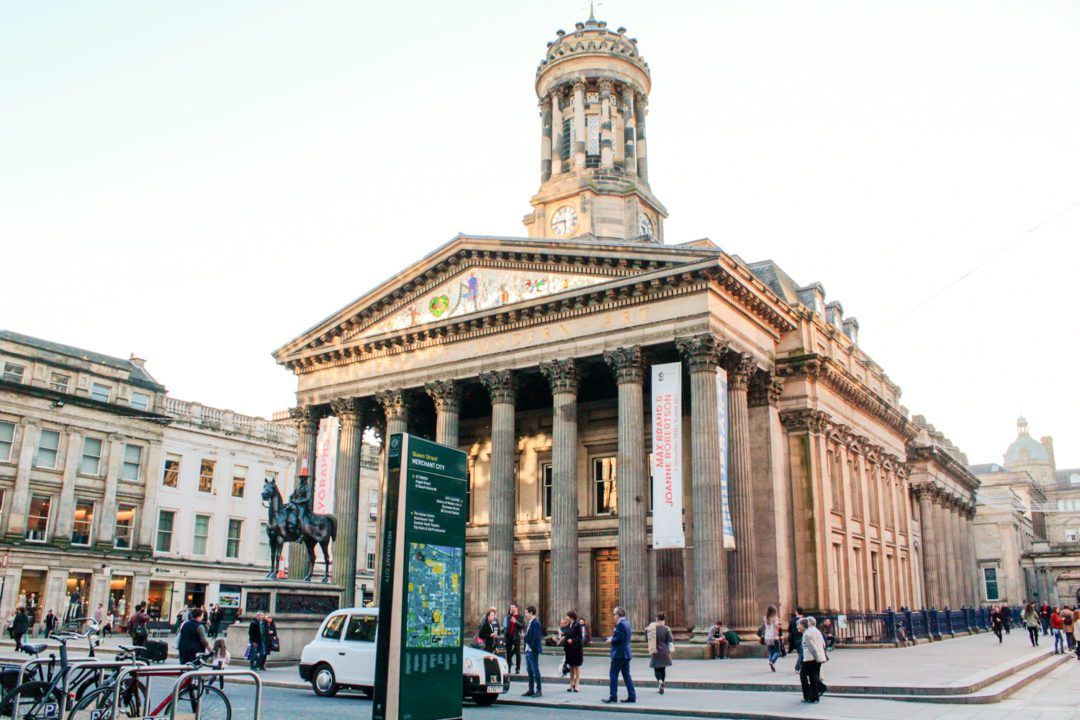
- Kelvingrove Museum: Dalí masterpieces and free treasures in the West End
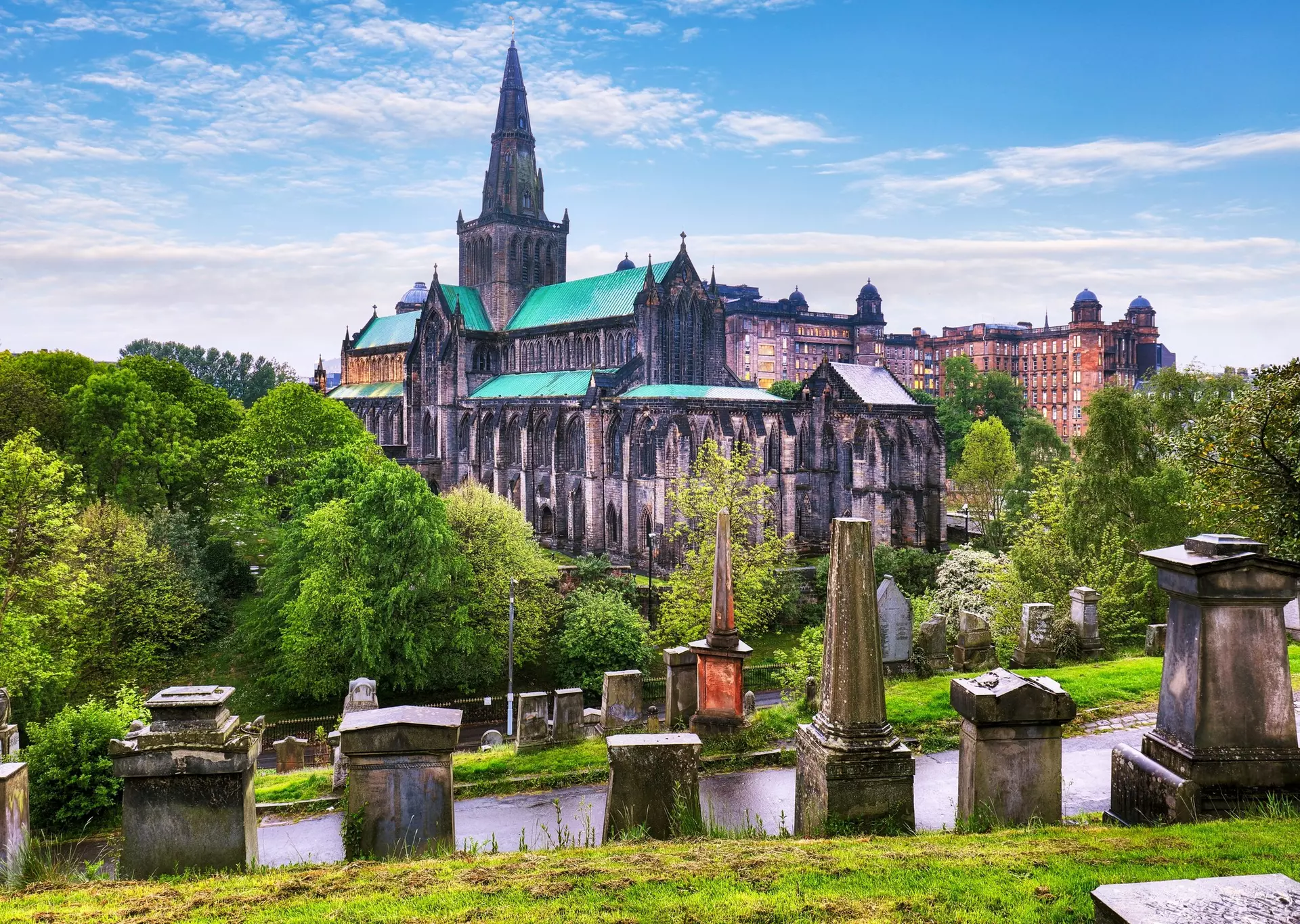
- Glasgow Cathedral and the Necropolis: Historic guide and legends
- Ashton Lane and the West End: Glasgow's most photogenic spot
- Glasgow Mural Trail
- The Riverside Museum
- Edinburgh step by step: the ultimate guide to squeezing the capital
PUBLICIDAD
International Travel Insurance
- ✓International medical insurance
- ✓24/7 immediate assistance in your language
- ✓Ideal for trekking & adventure

Preferences
Language
Color
Text
Width